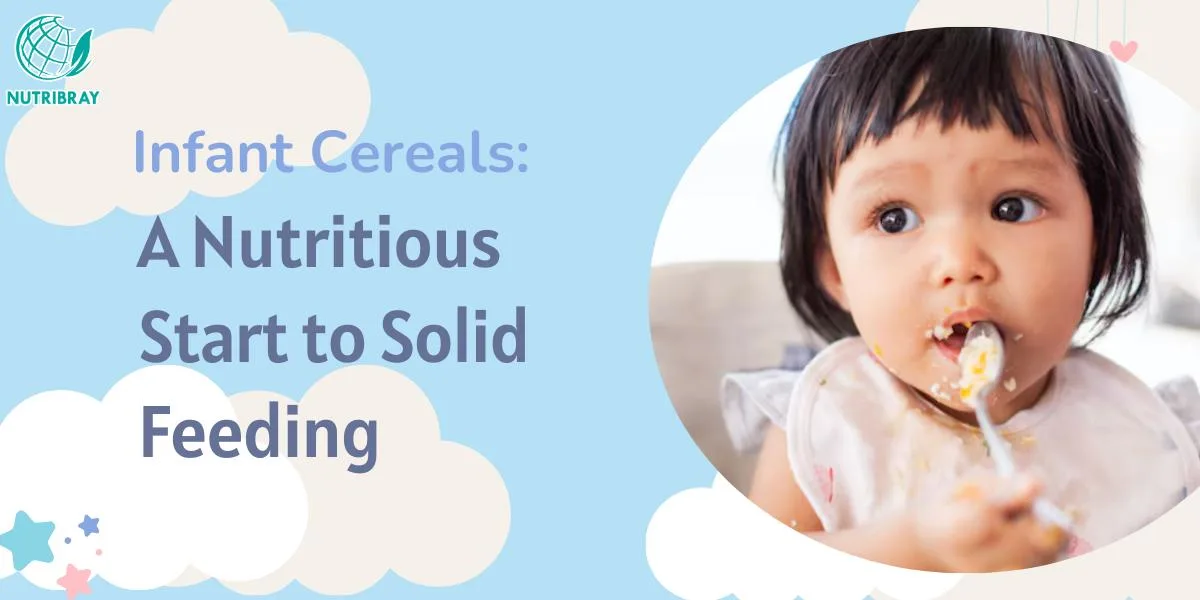
Introducing solid foods is an important milestone in a baby’s growth journey. Around six months of age, babies begin to need nutrients beyond what breast milk or formula alone can provide. This is where infant cereals play a vital role, offering a safe, nutritious, and easily digestible first food.
Infant cereals are specially designed to support healthy growth while helping babies adjust smoothly to solid foods.
What Are Infant Cereals?
Infant cereals are grain-based foods made specifically for babies starting complementary feeding. They are finely milled, easy to digest, and often fortified with essential nutrients to meet a baby’s developmental needs.
Common types of infant cereals include:
- Rice cereal
- Wheat cereal
- Oat cereal
- Multigrain cereal
These cereals are usually prepared with breast milk, infant formula, or water to create a soft, smooth texture suitable for babies.
Why Infant Cereals Are Important
As babies grow, their iron stores begin to decrease. Infant cereals are often fortified with iron, making them an important food to prevent iron deficiency during early development.
Infant cereals help:
- Support healthy growth and weight gain
- Provide energy for daily activity
- Supply essential nutrients like iron, zinc, and B-vitamins
- Develop chewing and swallowing skills
- Introduce babies to new tastes and textures
Their smooth consistency makes them ideal for a baby’s developing digestive system.
Benefits of Infant Cereals
Easy to Digest
Infant cereals are processed to be gentle on a baby’s stomach, reducing the risk of digestive discomfort.
Rich in Essential Nutrients
They are fortified with key vitamins and minerals needed for brain development, immunity, and bone health.
Supports Gradual Weaning
Infant cereals help babies transition from milk to solid foods in a safe and structured way.
Promotes Brain Development
Iron and essential nutrients in infant cereals support cognitive development during early childhood.
When and How to Introduce Infant Cereals
Infant cereals are typically introduced at around 6 months of age, when a baby shows readiness signs such as sitting with support and showing interest in food.
Tips for introduction:
- Start with single-grain cereals
- Prepare with breast milk or formula for familiar taste
- Begin with small amounts and increase gradually
- Observe for any signs of food allergy
Choosing the Right Infant Cereals
When selecting infant cereals, look for:
- No added sugar or salt
- Fortified with iron and essential nutrients
- Smooth texture suitable for your baby’s age
- Trusted quality and safety standards
Always follow preparation and storage instructions carefully.
Infant cereals are an ideal first step into solid feeding, providing essential nutrition while supporting healthy growth and development. With the right choice and proper preparation, infant cereals help make the transition to solid foods safe, nourishing, and enjoyable for both babies and parents.
A healthy beginning with infant cereals lays the foundation for balanced eating habits and lifelong wellness.